
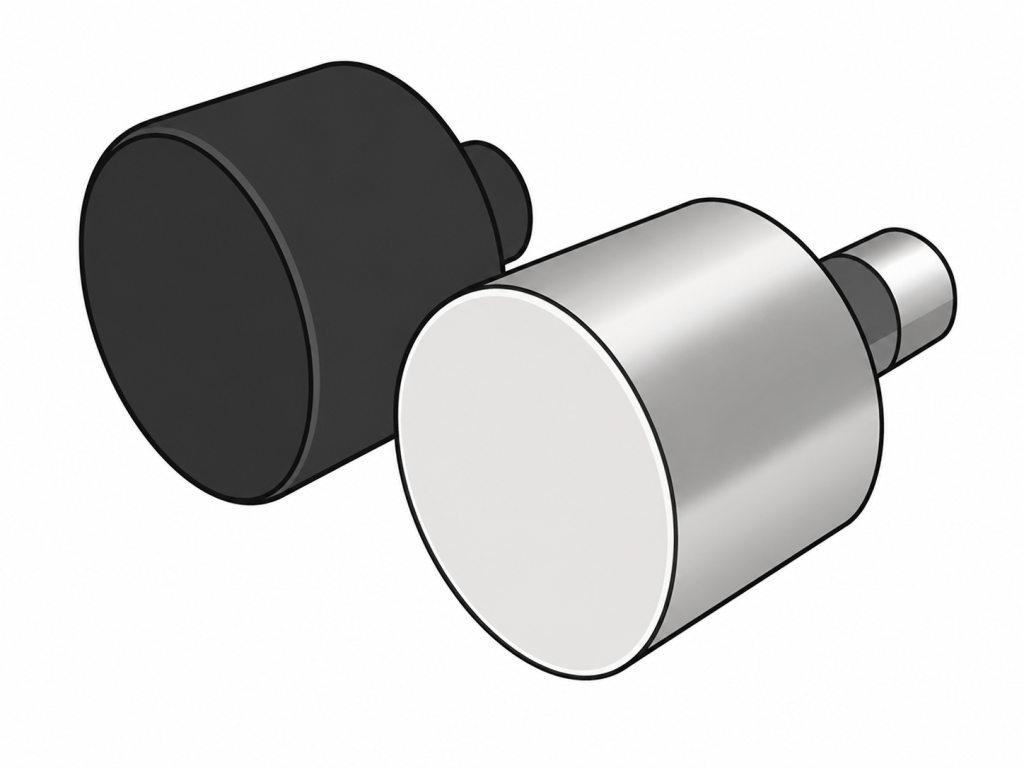
In an ultrasonic sensing system, the transducer is not just another component. It is one of the main factors that determines how well the sensor performs in the real application.
The transducer is responsible for converting electrical energy into ultrasonic sound pulses, then receiving the returning echo and converting it back into an electrical signal. Because of that, its design can directly affect sensing range, beam pattern, signal strength, response consistency, and long term reliability.
For procurement teams buying replacement transducers, this matters because a transducer that physically fits the application is not always the same as one that performs correctly in the system. Frequency, housing material, beam angle, mounting style, cable configuration, and environmental exposure can all influence performance. A replacement transducer should be evaluated not only by size or operating frequency, but also by how it interacts with the electronics, target surface, and operating conditions.
For ultrasonic sensor manufacturers, the transducer is even more central to product performance. A sensor may have excellent electronics and signal processing, but if the transducer is not well matched to the application, the system can still struggle with weak echoes, unwanted reflections, poor target detection, or inconsistent readings over time.
Several factors can affect transducer performance in the field:
- The operating frequency influences range, resolution, and sound attenuation.
- The beam angle affects how the sound energy is directed toward the target.
- The housing material can determine whether the transducer holds up in harsh, wet, dusty, or chemically aggressive environments.
- The mechanical design can influence ringing, dead zone, sensitivity, and mounting stability.
The target surface also matters. Smooth, flat, and hard surfaces typically return stronger echoes, while angled, uneven, soft, or absorbent surfaces may require a different acoustic approach.
This is why custom transducer manufacturing can be valuable. Instead of forcing a standard design into an application that may not be ideal, the transducer can be developed around the actual sensing challenge. That may include the required range, target type, installation space, operating environment, mounting needs, and the electronics used in the final sensor system.
At Parsonics Corporation, we manufacture ultrasonic transducers for applications where performance, fit, and reliability matter. Whether the need is a replacement transducer or a custom design for an ultrasonic sensing product, the right transducer can make a measurable difference in how the complete system performs.
Contact Parsonics Corporation to discuss a custom ultrasonic transducer for your sensor.