
Ultrasonic Transducer FAQ from Parsonics Corpration
Answers to common questions about ultrasonic transducers, selection, applications, and custom design
Ultrasonic transducers are used in industrial sensing systems for level measurement, open channel flow, obstacle avoidance, proximity sensing, distance measurement, and related applications. While the basic principle is simple, selecting the right transducer depends on more than frequency alone.
Sensing range, beam angle, target surface, housing material, mounting style, temperature, cable configuration, and drive electronics can all affect performance. Parsonics Corporation manufactures ultrasonic transducers for standard, replacement, and custom applications where the transducer must be matched to the sensing environment.
Contact Parsonics Corp. About Your Transducer Application
Quick Answer Box
| Question | Quick Answer |
|---|---|
| What is an ultrasonic transducer? | An ultrasonic transducer converts electrical energy into high-frequency sound waves and can convert returning echoes back into electrical signals. |
| What is an ultrasonic transducer used for? | Ultrasonic transducers are used for level measurement, flow monitoring, proximity sensing, obstacle avoidance, distance measurement, automation, and related sensing applications. |
| How does an ultrasonic transducer work? | A piezoceramic element vibrates when driven by an electrical signal. That vibration creates ultrasonic sound. Returning echoes cause the element to generate a small electrical signal. |
| What is inside an ultrasonic transducer? | The main component is typically a piezoceramic element, along with housing, acoustic matching materials, wiring, cable, and sometimes thermal compensation components. |
| How do I choose an ultrasonic transducer? | Start with sensing range, target material, frequency, beam angle, housing material, mounting style, operating temperature, and the drive and receive electronics. |
| Can ultrasonic transducers be customized? | Yes. Custom options can include frequency, housing material, cable length, mounting configuration, thermal sensing, beam control, and application-specific mechanical design. |
The Basics
What is an ultrasonic transducer?
An ultrasonic transducer is an electroacoustic device that converts electrical energy into ultrasonic sound waves. In many sensing systems, the same transducer also receives returning echoes and converts that acoustic energy back into an electrical signal.
In air-ranging and industrial sensing applications, ultrasonic transducers are commonly used to measure distance, detect objects, monitor level, or support flow measurement. The transducer is one of the most important components in the sensing system because its frequency, beam pattern, sensitivity, housing, and mechanical design directly affect performance.
How does an ultrasonic transducer work?
An ultrasonic transducer works by using a piezoceramic element. When an electrical pulse is applied, the piezoceramic element expands and contracts rapidly, creating ultrasonic sound waves. These sound waves travel through air or another medium until they reflect from a target surface. When the echo returns, pressure from the sound wave acts on the piezoceramic element and creates a small voltage signal that can be processed by the electronics.
What is a piezoceramic element?
A piezoceramic element is the active component inside many ultrasonic transducers. It is often shaped as a disk, bar, or ring, and a transducer may contain one element or multiple elements arranged in an array. The size, shape, and thickness of the piezoceramic element help determine the frequency at which the transducer operates.
What is the difference between an ultrasonic sensor and an ultrasonic transducer?
An ultrasonic transducer is the component that sends and receives the sound energy. An ultrasonic sensor is usually the complete device or system, which may include the transducer, housing, electronics, signal processing, outputs, and mounting hardware.
For OEMs and sensor manufacturers, the transducer is often the critical component that determines how well the finished sensor performs in the application.
What is the purpose of an ultrasonic transducer?
The purpose of an ultrasonic transducer is to generate and receive ultrasonic sound. In industrial applications, this allows a system to detect distance, level, object presence, flow conditions, or target position without physical contact.

Applications for Ultrasonic Transducers
What are ultrasonic transducers used for?
Ultrasonic transducers are used in applications such as:
| Application | How the transducer is used |
|---|---|
| Level measurement | Sends sound toward a liquid, powder, grain, or solid material surface and receives the echo |
| Open channel flow | Supports flow measurement by detecting level or time-of-flight conditions |
| Proximity sensing | Detects whether an object is present within a target zone |
| Obstacle avoidance | Helps equipment detect objects without contact |
| Distance measurement | Measures the distance between the transducer and a target |
| Automation | Supports positioning, counting, sorting, monitoring, and control systems |
Can ultrasonic transducers be used for level measurement?
Yes. Ultrasonic transducers are commonly used for non-contact level measurement of liquids, bulk solids, powders, and grains. The transducer sends a sound pulse toward the material surface and receives the reflected echo. The system then uses the echo timing to determine distance or level.
The application must be reviewed carefully because target surface, turbulence, foam, vapors, mounting angle, and range can affect performance.
Can ultrasonic transducers be used for open channel flow?
Yes. Ultrasonic transducers can be used in open channel flow applications, often as part of a system that measures level or flow-related distance. Several Parsonics transducer models list open channel flow as an application, including models designed with rugged housings and chemically resistant materials.
Can ultrasonic transducers be used in chemically aggressive environments?
Yes, when the transducer is designed with compatible materials. Parsonics offers transducers with housing materials such as Teflon, Kynar, PVC, CPVC, and stainless steel depending on the model and application. The PAR4012 Series specifically lists PVC or CPVC, Teflon, Kynar, and stainless steel as available housing materials.

How do I choose the right ultrasonic transducer?
To choose the right ultrasonic transducer, start with the application requirements:
| Selection Factor | Why It Matters |
|---|---|
| Sensing range | Helps determine frequency, sensitivity, and acoustic design |
| Target material | Liquids, powders, solids, foam, metal, glass, and plastic reflect sound differently |
| Target surface | Smooth, angled, rough, turbulent, or uneven surfaces affect echo strength |
| Frequency | Impacts range, resolution, attenuation, and target response |
| Beam angle | Affects target discrimination, echo strength, and sensing coverage |
| Housing material | Must match chemical, temperature, mechanical, and environmental requirements |
| Mounting style | Poor mounting can increase ringing or reduce performance |
| Temperature | Affects speed of sound and transducer response |
| Electronics | Drive signal, receive circuit, gain, and signal processing affect usable range |
| Cable or connector | Must match installation, shielding, and environmental requirements |
Why does frequency matter in an ultrasonic transducer?
Frequency affects the way sound travels, the achievable sensing range, the beam pattern, the required drive electronics, and how the transducer responds to the target. Lower frequencies are often used for longer ranges because lower-frequency sound is generally less affected by attenuation. Higher frequencies may be useful for shorter-range applications where smaller size, tighter resolution, or a smaller target area is required.
For Parsonics, this is a good place to show examples without turning the FAQ into a catalog. For example, Parsonics transducers include models such as 14.6 kHz, 20 kHz, 40 kHz, 58 kHz, 75 kHz, and 200 kHz options across different ranges and housings.
Why does beam angle matter?
Beam angle determines how the ultrasonic energy spreads from the transducer. A narrow beam can help focus energy and improve target discrimination, but it may be more sensitive to target angle or uneven surfaces. A wider beam can help detect uneven or angled surfaces, but it may reduce target discrimination.
What is dead zone or blanking zone?
The dead zone, also called the blanking zone, is the area directly in front of the transducer where echoes cannot be reliably received. It is caused by transducer ringing, which is the continued vibration of the piezoelectric element after the excitation pulse ends.
This matters when the application requires close-range detection. If the target can move too close to the transducer face, the transducer and electronics must be selected carefully.

Need a custom or replacement ultrasonic transducer?
Parsonics can help review your application and determine whether an existing or custom ultrasonic transducer is the right fit. To start the discussion, send as much of the following information as possible:
| Information | Why It Matters |
|---|---|
| Application | Level, flow, proximity, obstacle avoidance, distance, or another sensing need |
| Target material | Liquid, powder, grain, solid, metal, plastic, foam, etc. |
| Sensing range | Minimum and maximum distance from the transducer face |
| Environment | Temperature, humidity, washdown, outdoor exposure, dust, vapor, or pressure |
| Chemical exposure | Determines housing and acoustic window material |
| Mounting style | Threaded, flush, cap, bracket, replacement geometry, or custom fitting |
| Frequency requirement | Existing design requirement or desired operating frequency |
| Beam angle requirement | Narrow beam, wide beam, horn, or specific acoustic pattern |
| Cable and connector | Cable length, connector type, shielding, or special termination |
| Electronics | Drive voltage, receive circuit, impedance, capacitance, thermistor, or transformer needs |
| Quantity | Prototype, repair, low-volume production, or OEM production |
Can ultrasonic transducers measure food ingredients without contact?
Yes. Air-ranging ultrasonic transducers determine distance by transmitting sound toward a target and measuring the returning echo.
This allows liquid levels, bulk materials, containers, products, and other targets to be measured without the transducer mechanically contacting the target.
Can ultrasonic transducers measure grain, flour, or powders in a hopper?
Ultrasonic technology can be used to measure bulk solids such as grain and powders.
However, irregular or sloped surfaces can scatter ultrasonic energy. Frequency, beam angle, sensor position, and target characteristics should therefore be evaluated before selecting a transducer.
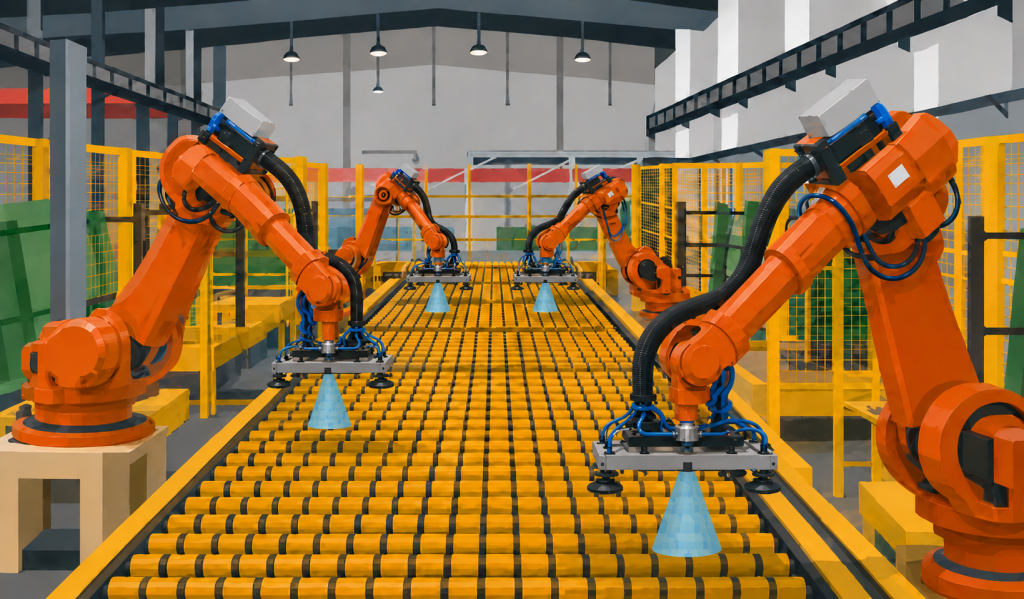
Can ultrasonic transducers detect products on a conveyor?
Yes. Ultrasonic transducers can be incorporated into systems for product presence detection, positioning, distance measurement, counting, and process automation.
Performance depends on factors such as target size, orientation, distance, and surface characteristics.
What materials are available for Parsonics transducer housings?
Depending on the transducer family and configuration, Parsonics offers housing materials including PVC, CPVC, Teflon®, Kynar®, and stainless steel.
The correct material should be selected based on the environment and chemical exposure of the application.
Can Parsonics customize an ultrasonic transducer?
Yes. Parsonics works with OEMs and equipment manufacturers on custom ultrasonic transducer applications.
Customization may include frequency, housing materials, dimensions, beam characteristics, cable configuration, mounting, temperature compensation, and other application-specific requirements.
Can ultrasonic transducers measure grain level in a silo?
Yes. Ultrasonic systems can measure the distance from a transducer mounted above the material to the surface of grain or other bulk solids. Surface angle, material characteristics, beam angle, range, and vessel geometry should be considered when selecting the transducer.
Can ultrasonic transducers detect powders and bulk solids?
Many powders and bulk solids can be detected ultrasonically, but the strength of the returned echo depends on the material and surface condition. Uneven or sloped surfaces can scatter the reflected sound, making beam characteristics an important part of transducer selection.
Can ultrasonic transducers be used in food processing equipment?
Ultrasonic transducers can be integrated into food processing machinery for non-contact level measurement, presence detection, distance measurement, conveyor monitoring, and equipment automation. Material and construction requirements should be evaluated for the specific installation.
Does dust affect ultrasonic measurement?
Heavy airborne material can reduce the strength of an ultrasonic signal. Frequency, sensing distance, target strength, and environmental conditions should be evaluated when designing a system for dusty environments.
What frequency is best for grain or bulk material measurement?
There is no single frequency that is correct for every application. Longer sensing distances generally favor lower frequencies, while shorter-range applications may use higher frequencies. Target geometry, beam requirements, vessel dimensions, and electronics also influence the selection.
Can ultrasonic transducers measure liquid level without touching the liquid?
Yes. A transducer can be mounted above the liquid and measure the distance to its surface using the reflected ultrasonic echo.
Can ultrasonic transducers detect products on a conveyor?
Yes. Ultrasonic transducers can be used for product presence, position, distance, and proximity measurement when the target provides a suitable acoustic reflection.
Can Parsonics customize a transducer for an OEM application?
Yes. Parsonics can work with OEMs and system designers on application-specific transducer requirements including frequency, beam characteristics, housing materials, mounting, cable configuration, and mechanical design.
Send Parsonics Corp. Your Transducer Requirements